Aláwòṣàn

Yoruba herbal wisdom, carefully shared

Ewé ni oògùn — the leaf is the medicine

An AI companion for herbal practice grounded in Yoruba tradition of Nigeria: accurate identification, nutrition, healing uses, preparation, spiritual meaning across world traditions, and the cautions that keep people safe. Built for those with the least access to care — and always supportive to medical healthcare, never a replacement.
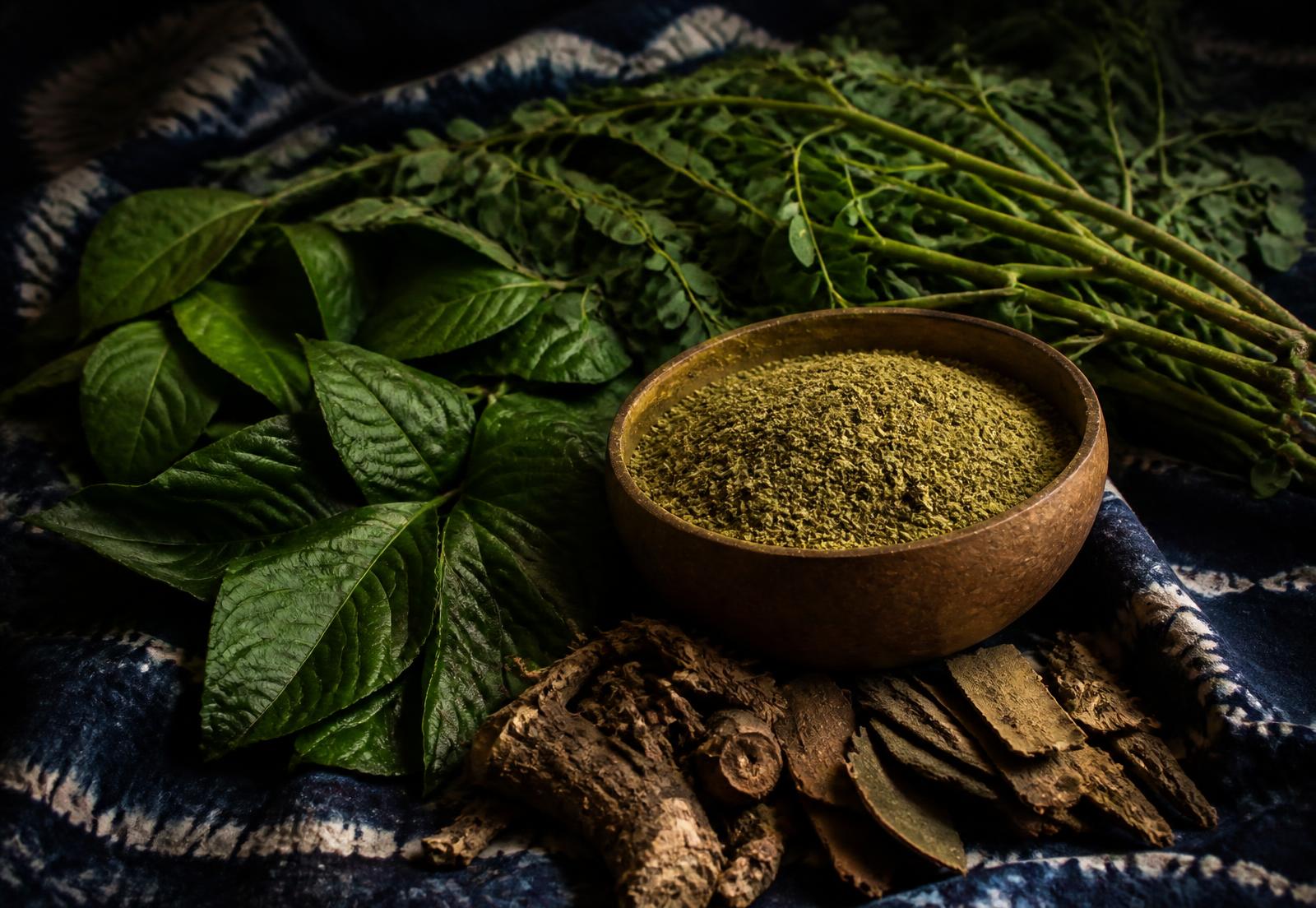
Fresh West African medicinal leaves, roots and bark arranged on indigo adire cloth with a calabash of ground herbs

Identify with care

Yoruba, English and botanical names, plus the toxic look-alikes to rule out.

Nourish and support

Nutritional value and traditional healing uses, with honest preparation guidance.

Safety first

Every herb carries its cautions, pregnancy warnings and drug interactions.

Herb library

Ewé àti egbò — leaves and roots of Yoruba practice. Each entry covers nutrition, traditional uses, preparation, spiritual context and cautions.

Ewúro

Bitter leaf

Vernonia amygdalina

One of the most widely used leaves in Yoruba households, squeezed and washed before cooking, and taken as a bitter infusion for cleansing and appetite.

3 cautions

Efinrin

Scent leaf / African basil

Ocimum gratissimum

Aromatic kitchen and doorway herb, used for its warming, clearing quality in food, steam and washes.

3 cautions

Ẹwẹ́ Ìgbàlẹ̀ (Moringa)

Moringa / drumstick tree

Moringa oleifera

Adopted across Nigeria as a daily nourishing leaf, valued for rebuilding strength in weakness and undernutrition.

3 cautions

Atalẹ̀

Ginger

Zingiber officinale

Warming rhizome used in food, agbo (herbal decoction) and daily drinks for digestion and circulation.

3 cautions

Atalẹ̀ Pupa

Turmeric

Curcuma longa

Golden rhizome used as food colour and as a supportive anti-inflammatory in modern Yoruba herbal practice.

3 cautions

Ẹwẹ́ Àbámọ̀dá

Never die / life plant

Bryophyllum pinnatum

Thick succulent leaf warmed over fire and applied for swellings, boils and wounds in traditional care.

3 cautions

Orógbó

Bitter kola

Garcinia kola

Hard bitter seed chewed for the chest and throat, and central to Yoruba hospitality and prayer.

3 cautions

Dòngòyárò

Neem

Azadirachta indica

The famous bitter bark and leaf decoction taken across Nigeria during fever seasons and used widely on the skin.

4 cautions

Ẹyìn Olóbẹ̀

Stonebreaker / chanca piedra

Phyllanthus amarus

Small roadside herb long used in Yoruba practice for the liver, urinary tract and stones.

3 cautions

Ahọ́n Ekùn

Aloe vera

Aloe barbadensis

Succulent gel used on burns, wounds and skin, and in careful internal preparations.

3 cautions

Ask Aláwòṣàn

Describe a plant, a symptom, a tradition or a preparation. Answers always name the cautions and point to medical care where it is needed.

Aláwòṣàn

Yoruba herbal knowledge companion

Ask about a herb by its Yoruba, English or botanical name — or describe the leaf, stem and where it grows and I will help narrow it down.

Photo identification is a best guess with confidence levels — always confirm with an experienced herbalist before use. Educational and cultural information only. Supportive to — never a replacement for — medical care.